
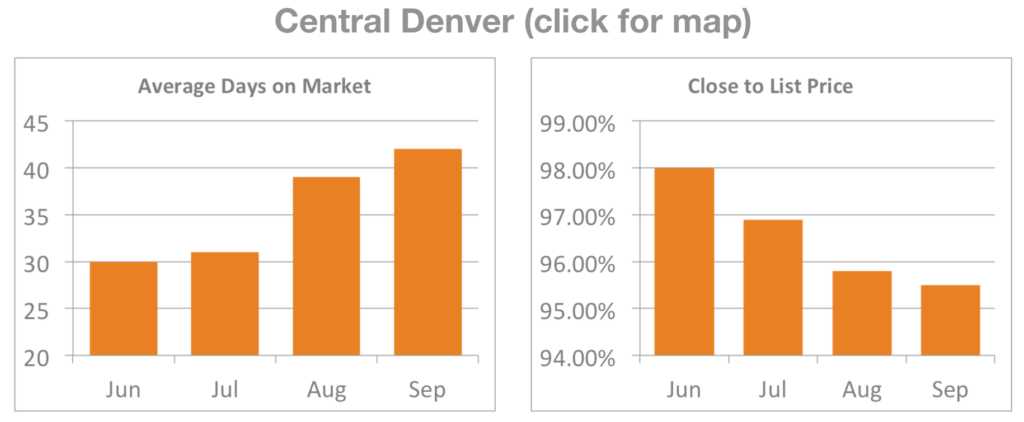
Each year during the fall the average days on market increases and the list price to sales price ratio decreases for homes in central Denver, but why?
The phenomenon begins in the spring when buyer and seller activity are mismatched — most likely as a result of summer vacations. You see, buyers start looking for homes in late winter and early spring. They want to make their move before summer arrives so that they can enjoy long days and sunshine. Sellers, on the other hand, don’t want to list their homes in late winter. The yard is hibernating, the dog is tracking in mud, and it’s dark early. Besides, summer would be an ideal time to list when the family is on vacation during all those showings. High demand and low supply force spring prices up.
As summer arrives, successful buyers who paid premium prices, are now on vacation with sellers who just listed their homes. The sellers have expectations of achieving the recent record setting spring prices. The increased supply and lower demand cause the spring-priced summer-listed homes to sit on the market as we move toward fall.
As fall sets in, sellers become frustrated with their ever increasing days on market, and they begin dropping their prices as shown in the chart above. During this time, savvy buyers take advantage of the seasonal mismatch to pick up homes at a discount until the the cycle begins next year.